Linux/BSD preinstalled computers with Libreboot BIOS/UEFI replacement, for your computing freedom. Completely free and open source software.

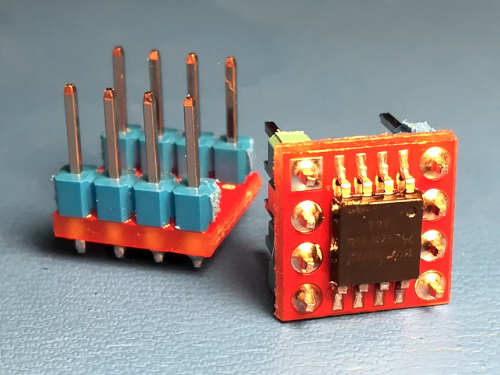
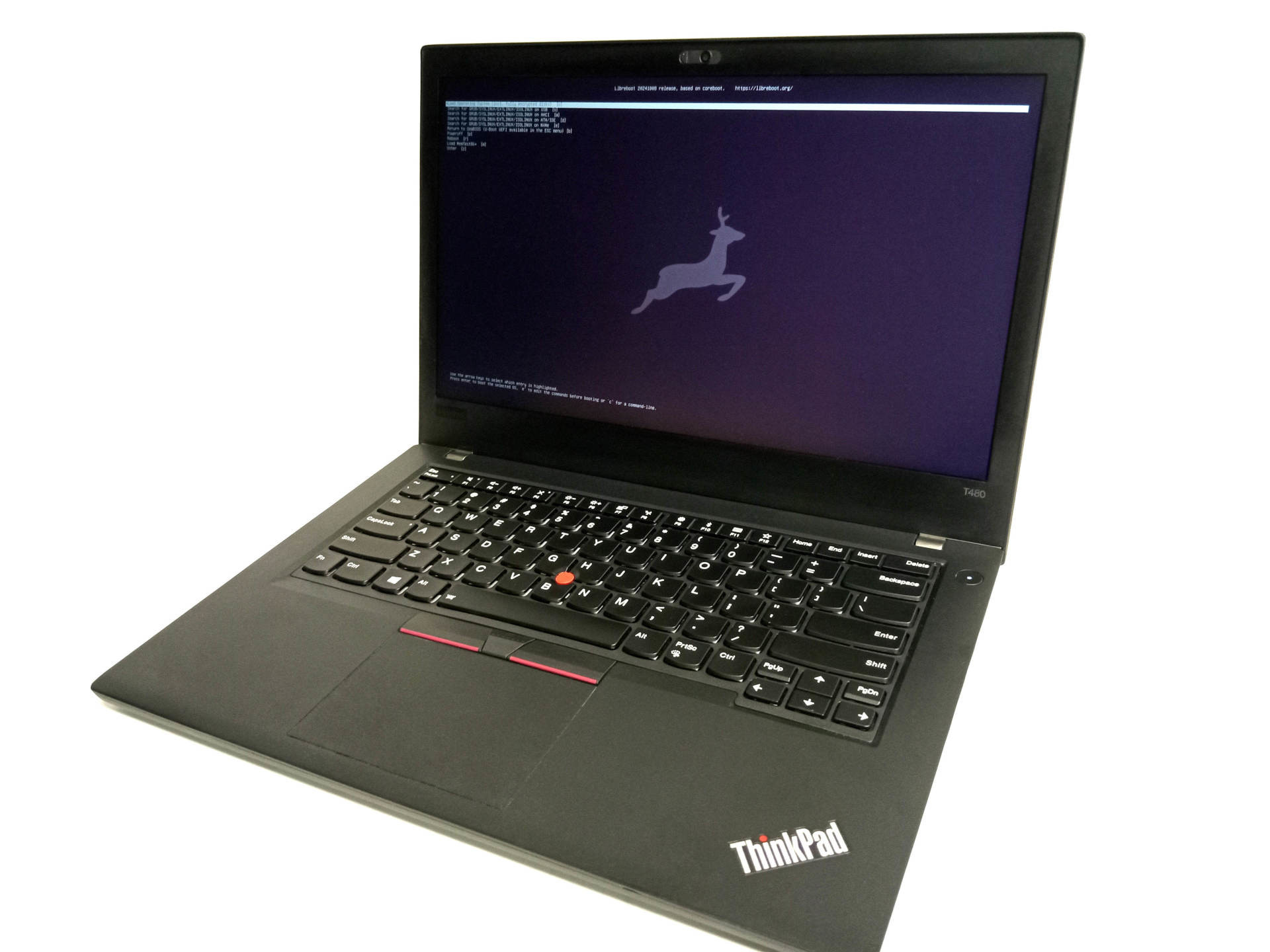
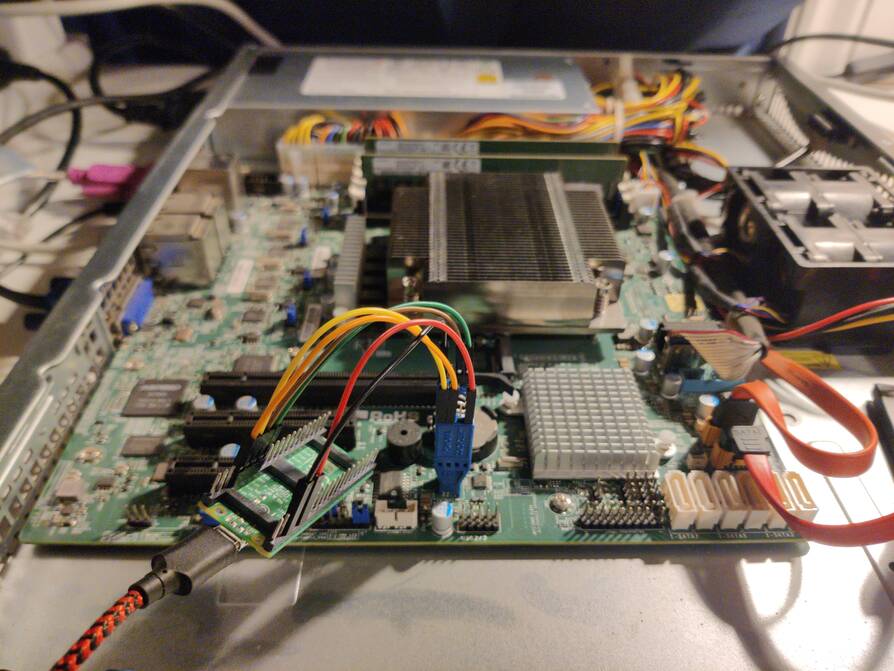
| Libreboot send-in service | |
|---|---|
| Service fee | £338+shipping |
| How to purchase: | Email us for an invoice |
| Payment methods: | Wise payment link provided; card payment available, ditto Apple/Google Pay. Wire transfer also available. |
Free as in freedom!
Minifree no longer sells hardware. People who ordered computers will receive shipment soon; since October 2026, Minifree provides only paid Libreboot installation send-in service.
Send your coreboot- or Libreboot-compatible hardware for Libreboot installation. It will be added to Libreboot, where indicated. The owner of Minifree Ltd, Leah Rowe, is also Libreboot’s founder and lead developer. Sales fund Libreboot, and Minifree’s new business model enables a wider variety of hardware to be worked on while greatly reducing administrative overheads by no longer managing stock; this enables more time to be spent on Libreboot itself.
Libreboot replaces proprietary BIOS/UEFI firmware, offering users greater security and configurability, like when using Linux instead of Windows; you become the true owner of your computer. Libreboot is a coreboot distro, patching and building upstream sources in any number of configurations, like how Linux distro package managers work. This, along with regular stable releases, serves Libreboot’s main goal: make coreboot easy to use.
Libreboot 26.10 came out in October 2026 and added support for hundreds of Chromebooks; with it came full EDK2 UEFI payload support, for modern UEFI-compliant operating system support on all boards. Libreboot supports Chromebooks, ThinkPads, Dell OptiPlexes, Latitudes, HP EliteBooks, various server boards and more, with excellent Linux/BSD driver support.
Optionally, at no extra cost: Minifree can also provide your choice of Debian Linux installation, other Linux distro or a BSD system e.g. OpenBSD, FreeBSD. This can be done even on non-coreboot-compatible hardware, though Minifree largely focuses on coreboot and Libreboot.
What hardware can I send Minifree?
Every Google Chromebook is supported by Libreboot, added in the recent Libreboot 26.10 release. We support a number of other machines, and support can also be added for more hardware.
Minifree also provides service for the following Libreboot-compatible mainboards:
- ASUS KCMA-D8 or KGPE-D16 motherboard (AMD FAM15h) - recently with improved raminit from 15h.org, as in Libreboot 26.10 or later
- Dell Latitude laptop models: E6400, E6400 XFR, E6400 ATG (Intel GPU models) - please do not send one that has an Nvidia GPU
- Dell Latitude laptop models with Intel GPU: E5420, E5520, E5530, E6420, E6430, E6520, E6530, E6230, E6330, E6220, E7240
- Dell OptiPlex models: 3050 Micro, 5050 SFF, 7010/9010 SFF/MT, 780 (all variants), 9020 SFF/MT, 7020 SFF/MT
- Dell Precision T1650
- HP Elite 8200 SFF/MT, 8300 USDT (desktop boards)
- HP EliteBook models: 2170p, 2560p, 2570p, 820 G2 / 840 G2, 8460p, 8470p
- Lenovo ThinkPad models: R400, R500, T400 / T400s, T420 / T420s, T430, T440p, T480/T480s, T500 / W500, T520, T530, T580, W541/W540, X200 / X200s / X200 Tablet, X220 / X220i / X220 Tablet, X230 / X230i / X230 Tablet
- Topton X2E N150 aka BKHD H30W-N150 desktop
There are a few more exotic or obscure mainboards supported by Libreboot.
Even if Libreboot doesn’t support your hardware, you can still use this service; if coreboot or another free firmware project supports it, then Libreboot can easily integrate it, so support will be added with your sent in product used for testing, and then shipped back to you when ready.
Rapid ongoing modernisation of Libreboot and expansion of Libreboot hardware compatibility means that Minifree expects commercial demand for Libreboot services to rise exponentially, over the next few years. The transition to service-only operation was made, so that Minifree can more flexibly work on Libreboot itself, as receiving a variety of hardware will ensure that there always new work done. This is efficient because it means that the very nature of the work itself will lend itself directly to further Libreboot development, instead of trying to sell lots of one or two ThinkPad models like Minifree previously did. Service-only operation just makes Minifree more efficient, because then it no longer has to deal with stock; a high percentage of the work is lab work, instead of administrative tasks.
Libreboot even supports the Sony PlayStation - and Minifree can install it for you (it uses PCSX-Redux OpenBIOS) along with other mods shown on that page (you must supply parts, and Minifree will provide advice for this). Actually, Leah Rowe generally competent at retro console modding if you have a different enquiry about that.
Why use these machines?
Libreboot recently added EDK2 payload support for all modern Intel/AMD boards (modern means 64-bit compatible), so you get full support for normal Linux bootloaders, and you could even boot Windows if you want (not recommended); BSD systems are also easier to use, since the Libreboot 26.10 release which added this. So there’s that; modern Libreboot now works pretty much like standard firmware, booting virtually any modern UEFI-compliant operating system that you throw at it.
Leah Rowe, the owner of Minifree, is also the founder of Libreboot, and lead developer; Minifree profits directly fund the Libreboot project. These computers are sold, specifically because we believe in the ideals of the Free Software movement. We want everyone to be able to do all of their computing with only free and open source software. This is done purely on ideological grounds, but there are many practical advantages.
You are the owner of your own computer. It is your property. You can do whatever you want on it. That is the principle of the Free Software movement, that nobody but you should decide how to run your own machine. Libreboot will never spy on you or send data to third parties.
Libreboot offers many advanced security features that you can’t get anywhere else, such as true full-disk encryption and features surpassing that of UEFI Secure Boot, such as full GPG signature checking of your Linux kernel. Libreboot is designed to be easy to use for novices, making coreboot more accessible for non-technical users, but it is also highly configurable, allowing you to modify your boot firmware in whatever way you wish.
Essentially, the benefit of using Libreboot is the same as using a Linux/BSD system, versus proprietary counterparts; Libreboot gives you a much greater level of control over your own computing, albeit it at a much deeper level than if you merely installed a free operating system.
Markdown file for this page: https://minifree.org/index.md
This HTML page was generated by the Libreboot Static Site Generator.
Email us if you wish to buy (card payment available). USA buyers: computers are exempt from US tariffs.
Email us if you wish to buy (card payment available). USA buyers: computers are exempt from US tariffs.